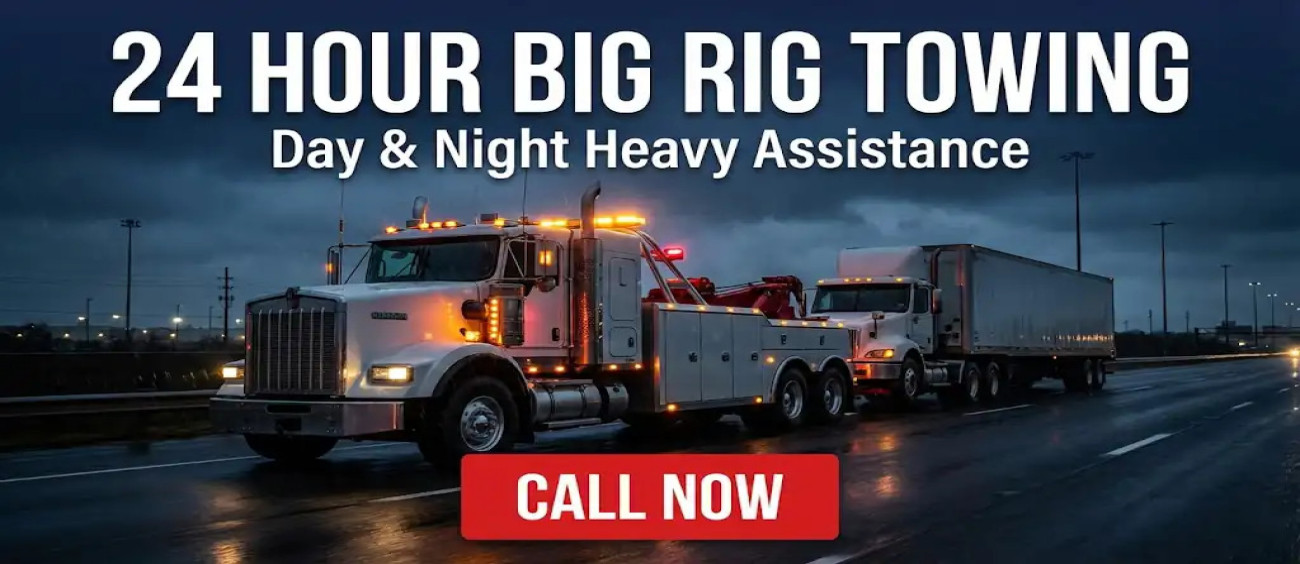
Canada’s vast geography and severe climate create unique stressors for commercial vehicles and heavy trailers:
Extreme Winter Cold & Freeze-Ups: Sub-zero temperatures drain batteries, thicken fluids, cause diesel fuel gelling, and freeze air brake lines when condensation locks up the system.
Trailer Suspension & Axle Failures: Rough highway conditions, heavy loads, and salt-induced corrosion accelerate wear on air springs, torque arms, and trailer hub bearings.
Reefer Unit Malfunctions: A temperature control failure in a refrigerated trailer during extreme summer heat or freezing winter weather can compromise thousands of dollars in perishable freight within hours.
Tire Blowouts & Tread Separation: Long-haul highway speeds combined with heavy payloads subject trailer tires to extreme heat and friction, making tire failures one of the most frequent reasons for emergency roadside calls.
Load Shifts & Off-Road Rollovers: Navigating icy turns or sudden stops can cause cargo to shift inside the trailer, throwing off the vehicle's center of gravity and causing jackknifes or ditch entry.
What to Do Immediately When a Breakdown Occurs
When a semi-truck or heavy trailer breaks down on a Canadian highway, driver safety and hazard mitigation take top priority before help arrives.
Prioritize Driver and Vehicle Positioning: If possible, maneuver the truck and trailer onto a wide shoulder or emergency turn-off well clear of traffic lanes. Turn on hazard lights immediately.
Deploy Emergency Warning Devices: Set out triangular reflectors or flares according to National Safety Code (NSC) distance standards to give oncoming traffic advance warning, especially in low-visibility winter or night conditions.
Stay Safe Inside or Clear of the Highway: On high-speed corridors, remaining inside the cab with the seatbelt fastened is often safer than standing near active traffic lanes, particularly during snowstorms.
Gather Critical Breakdown Information: When calling dispatch or an emergency heavy towing service, provide exact location markers (highway number, nearest mile/kilometer marker, direction), truck/trailer details, cargo status (e.g., hazmat, reefer temp settings), and the specific symptom or mechanical issue.
Heavy-Duty Towing & Recovery Services You Need to Know
Modern commercial towing goes beyond pulling a rig off the road. Specialized heavy-duty breakdown recovery providers in Canada offer comprehensive emergency services designed for commercial fleets:
Service Type
Primary Application
Heavy-Duty Underlift Towing
Safe towing of loaded semi-trucks and tractors without damaging front bumpers, fairings, or steering linkage.
Heavy Rotator Recovery
360-degree crane-boom recovery for overturned trailers, jackknifed rigs, or vehicles stuck off embankments.
Mobile Mechanical & Tire Service
On-site air line repairs, battery jump-starts, fuel delivery, and roadside tire replacement to avoid a full tow whenever possible.
Trailer Load Swap & Transloading
Emergency transfer of cargo from a disabled trailer to a replacement unit on the roadside or in a secure yard.
Reefer Monitoring & Auxiliary Power
Emergency mobile refrigeration power or technical repair to protect temperature-sensitive loads.
Not all towing companies are equipped to handle loaded 53-foot trailers or complex recovery operations in remote northern regions. When evaluating heavy-duty towing and roadside partners, look for these capabilities:
24/7/365 Emergency Response: Breakdown emergencies don't stick to business hours. Ensure your service provider maintains active dispatch around the clock.
Province-Wide & Cross-Border Coverage: Look for operators with extensive service networks across major Canadian freight routes and cross-border capabilities into the U.S.
Heavy-Duty Fleet Readiness: Verify they operate modern 50-ton to 75-ton rotators, heavy wreckers, lowboys, and mobile service trucks equipped for commercial rigs.
Transparent Pricing & Billing: Upfront rates for hookups, mileage, winch time, and specialized equipment prevent surprise expenses after a roadside recovery.
Taking time to establish a relationship with a trusted heavy-duty towing and breakdown partner before an emergency happens is one of the smartest operational decisions a fleet manager can make.